
An overcoat is warmer, longer and better for cold-weather layering, while a trench coat is lighter and better for wind or rain. BOSINNO coat collections support one-stop suit + overcoat procurement, helping buyers plan tailored outerwear and suit programs through one factory workflow.
La principal diferencia en overcoat vs trench coat design is warmth, weight and weather use. An overcoat is built for insulation. A trench coat is built for lighter weather protection.
An overcoat usually uses heavy wool, cashmere or wool-cashmere blends. It should have enough room to layer over a suit jacket without pulling at the shoulder or chest.
A trench coat usually uses lighter woven fabric. It may include a belt, storm flap, cruzado front or water-repellent finish.
| Coat Type | Main Use | Dirección de la tela | Retail Season |
| Abrigo | Cold-weather layering | Heavy wool or cashmere blend | Autumn and winter |
| Trench coat | Wind and rain protection | Lightweight woven or coated fabric | Spring and autumn |
| Peacoat | Short cold-weather outerwear | Heavy wool blend | Autumn and winter |
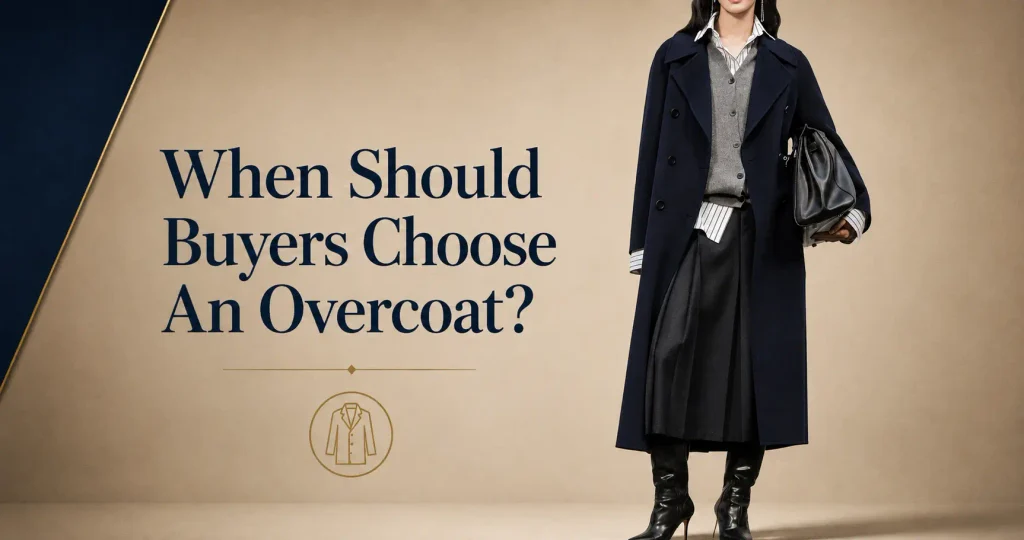
Buyers should choose an overcoat when the collection needs warmth, suit layering and formal winter styling. This style works well for commuters, executives and customers who wear tailoring in cold weather.
An overcoat should not feel bulky over a suit. Buyers should check shoulder ease, chest room, sleeve width, lining, length and hem movement before approving the sample.
For a coat reference, BOSINNO’s Abrigo versátil largo con solapa de muesca fits this section because it uses a wool-cashmere blend, wide double-stitched lapels and a roomy long-coat shape.

Buyers should choose a trench coat when customers need lighter outerwear for commuting, travel, wind and mild rain. The trench coat vs overcoat choice often depends on climate and selling season.
A trench coat works best for spring and autumn collections. It should feel lighter than an overcoat but still keep a clean tailored line over shirts, knitwear or light jackets.
Buyers should check:
A peacoat vs trench coat comparison starts with length and warmth. A peacoat is shorter, warmer and more casual. A trench coat is longer, lighter and more weather-focused.
A peacoat usually ends around the hip or upper thigh. This shorter shape works well for casual winter styling and younger retail groups.
A trench coat usually reaches the thigh or knee. It gives more coverage from wind and light rain, especially for business travel.
For a short wool-cashmere reference, BOSINNO’s Trendy Lapel Short Casual Coat helps buyers compare compact winter outerwear, double-breasted styling and lapel stitching details.
A peacoat vs overcoat comparison is mostly about formality, coverage and layering. A peacoat is shorter and more casual. An overcoat is longer, warmer and easier to wear over suits.
| Buyer Need | Better Option |
| Suit layering | Abrigo |
| Short winter styling | Peacoat |
| Formal office outerwear | Abrigo |
| Casual cold-weather looks | Peacoat |
| Premium winter collection | Abrigo |
Buyers should check fabric weight, lining, shoulder shape, closure, sleeve width and coat length before production. These details decide whether the coat works as real outerwear, not only as a showroom sample.
Overcoats need heavy wool, cashmere or wool-cashmere blends for warmth and drape. Trench coats need lighter fabrics that can handle wind or light rain.
A winter overcoat may need lining and interlining for warmth. A trench coat can be unlined or half-lined to reduce bulk.
One-stop suit and overcoat procurement helps buyers shorten supplier management and keep tailoring details more consistent. BOSINNO lists suits, jackets, coats and shirts within its tailored apparel range, which supports buyers planning matching businesswear and outerwear.
For procurement teams, this can reduce back-and-forth on fabrics, size standards, delivery timing and production tracking.
The best coat choice depends on climate, layering needs and customer use. Use overcoats for winter suit layering, trench coats for lighter commuting and peacoats for shorter cold-weather styling.
Before scaling, test one coat sample in the target fabric and length. Check shoulder comfort, closure balance, lapel shape and movement. If the coat works with the suit line, buyers can plan outerwear and tailoring together with fewer supply-chain gaps before committing to full seasonal production runs.

Respuesta rápida: ¿Por qué se arrugan los trajes de lino? Los trajes de lino se arrugan debido a la estructura de la fibra. Las fibras de lino son rígidas y tienen poca elasticidad, por lo que mantienen un pliegue en lugar de volver a su forma. Un traje de mezcla de lino y lana ralentiza eso: la lana añade elasticidad y recuperación, por lo que las arrugas son menos profundas y se relajan entre usos. Una mezcla [...]

Respuesta rápida Para los compradores que comparan trajes marinos vs. carbón, primero ten trajes marinos para la mayoría de las gamas de ropa masculina, luego añade carbón. El marino se percibe como profesional, combina con más camisas, corbatas y zapatos, y se vende a un grupo más amplio de clientes. El carbón se vende en segundo lugar, para ocasiones formales, corporativas y de temporada fría donde se espera un tono más tranquilo y oscuro. Así [...]

Respuesta rápida Al comparar trajes de lino vs lana, comience por cómo se comporta cada tejido en el uso. Para rangos de clima cálido, el lino ofrece el tacto más fresco y un aspecto mate y texturizado, pero se arruga y necesita mensajes de cuidado claros. La lana mantiene su forma, se recupera más rápido y cubre más temporadas. Un traje de mezcla de lino y lana se sitúa entre los dos […]
DIRECCIÓN: No.2299 SHUANGTA ROAD,OUBEI,WENZHOU,ZHEJIANG,325102 ,CHINA


