
A half-canvas suit gives better chest shape than a fused suit while keeping cost controlled, while a full-canvas suit gives more movement, durability and long-term structure. BOSINNO Signature Canvas suits help B2B buyers compare fused, half-canvas and full-canvas construction through sample review, chest-layer checks, padding-stitch control and AQL 1.0 inspection.
The main difference in half canvas vs full canvas suit construction is canvas coverage. Half canvas supports the chest and lapel. Full canvas extends through more of the jacket front, so the structure can move and settle more naturally.
Canvas is the hidden layer between the shell fabric and lining. It shapes the chest, supports the lapel roll and helps the jacket avoid a flat front. For buyers, this construction choice affects price, comfort, breathability, appearance and after-wear durability.
Canvas Anzugkonstruktion includes the outer fabric, chest canvas, haircloth or support layer, fusible or non-fusible components, lining and stitching method. These layers decide how the jacket holds shape after pressing, packing and repeated wear.
| Konstruktion | Internal Method | Best Procurement Use |
| Einlage | Adhesive support | Entry-level formalwear |
| Half canvas | Sewn chest and lapel support | Business and MTM suits |
| Full canvas | Broader sewn front support | Premium tailoring |
A buyer should ask which layers are sewn, which areas are fused and how the chest piece is pressed before approval.
A fused vs canvassed suit comparison starts with bonding. A fused suit uses adhesive to attach support material to the jacket front. It is faster and cheaper, but it can feel stiffer and may lose shape sooner.
A canvassed suit uses sewn internal support. The jacket can breathe better because fewer areas depend on adhesive bonding. It also moves more naturally across the chest and lapel.
Fused construction can still work for uniforms, budget programs or occasional suits. Canvassed construction suits buyers who need better drape and stronger retail value.
Buyers should choose half canvas when they need better shape without pushing the suit into the highest cost tier. It is often the safest commercial choice for business, wedding and MTM programs.
Der Marine Mini-Fischgrät-Sakko mit Einreiher is a useful half-canvas reference because it lists lightweight half-canvas construction, a notch lapel, and a wool-polyester-tencel-spandex blend.
Buyers should choose full canvas when the product line needs a stronger tailoring story, longer wear life and a softer front. Full canvas takes more labor because the chest layers and front structure need careful shaping.
BOSINNO Signature Canvas should be reviewed through padding stitch density, lapel roll, chest fullness, breathability and front balance. Padding stitch helps attach and shape the canvas without making the chest feel hard. This is important for premium MTM or private-label suits.
Padding stitch and chest layers matter because they control the jacket front. Poor padding stitch can create uneven lapel roll. Weak chest layers can make the suit collapse after wear.
During sample review, buyers should check:
AQL 1.0 inspection should include chest construction, not only outside appearance.
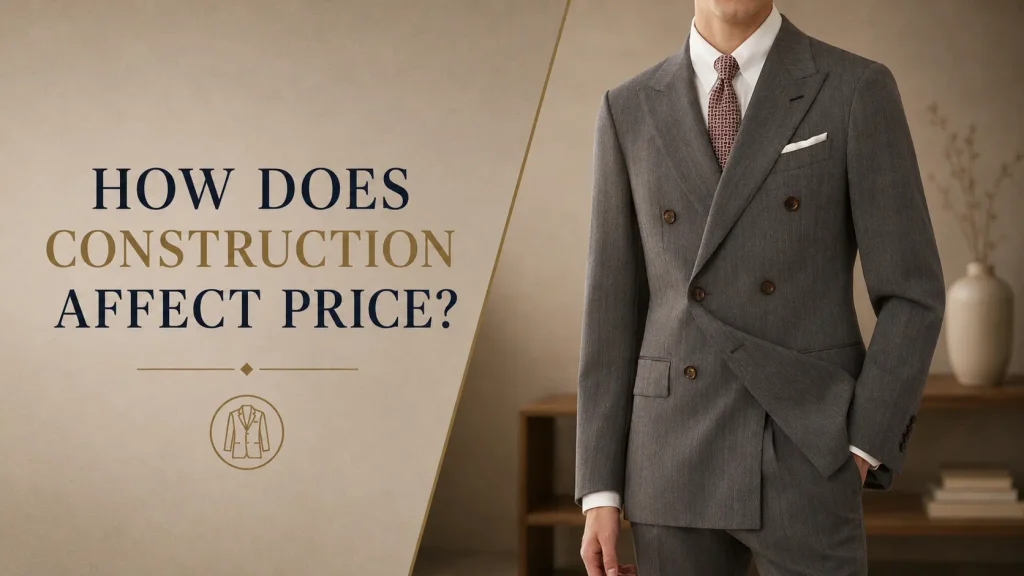
Construction affects cost and durability because every layer adds material, labor and inspection time. Fused construction controls price. Half canvas improves shape. Full canvas supports longer wear and a more premium feel.
Der Grauer 3D-Textur-Fischgrät-Zweireiher-Anzug gives buyers another half-canvas reference for a structured Geschäftsanzug with a peak lapel and wool-polyester fabric.
Buyers should define construction before quotation, not after sampling. The RFQ should state the target price tier, fabric weight, lining type, canvas level, lapel style, shoulder style, order quantity and inspection requirement. It should also note whether the buyer accepts fused support in non-visible areas or requires a fully sewn front.
For BOSINNO sourcing, include whether the style belongs to daily businesswear, wedding suits, executive suits or premium private-label tailoring. This helps the factory match chest layers, padding stitch work and production time to the final selling position.

The right structure depends on the buyer’s price point and customer promise. Use fused construction for controlled cost, half canvas for stronger business value and full canvas for premium suit programs.
Before scaling, approve one fit sample and review the chest, lapel roll, padding stitch, breathability and movement. If those areas match the target market, the construction level is easier to repeat across the full order before shipment.

Schnelle Antwort: Warum knittert Leinen? Leinenanzüge knittern aufgrund der Faserstruktur. Flachsfasern sind steif und wenig elastisch, daher behalten sie eine Falte, anstatt zurückzuspringen. Ein Leinen-Woll-Mischanzug verlangsamt dies: Wolle sorgt für Elastizität und Rücksprungkraft, sodass Falten flacher sitzen und sich zwischen den Tragevorgängen entspannen. Eine Mischung […]

Schnelle Antwort Für Käufer, die marineblaue vs. anthrazitfarbene Anzüge vergleichen, lagern Sie zuerst marineblaue für die meisten Herrenmode-Sortimente, dann fügen Sie anthrazit hinzu. Marineblau wirkt geschäftsmäßig, passt zu mehr Hemden, Krawatten und Schuhen und wird von einer breiteren Kundengruppe gekauft. Anthrazit verkauft sich als zweites, für formelle, geschäftliche und kältere Jahreszeiten, wo ein ruhigerer, dunklerer Ton erwartet wird. Also […]

Schnelle Antwort Beim Vergleich von Leinen- vs. Wollanzügen beginnen Sie damit, wie sich jeder Stoff im Gebrauch verhält. Für warme Wetterbereiche bietet Leinen die kühlste Haptik und einen matten, texturierten Look, aber es knittert und erfordert klare Pflegehinweise. Wolle behält ihre Form, erholt sich schneller und deckt mehr Jahreszeiten ab. Ein Leinen-Woll-Mischanzug liegt zwischen den beiden […]
ADRESSE: No.2299 SHUANGTA ROAD,OUBEI,WENZHOU,ZHEJIANG,325102 ,CHINA


